Olympics Outtake? The Treasure Toss
Watch or listen as artist Joyce Seymore commits the daring feat of throwing out an item she saved for 50 years (8-minute mini-episode)



Craving more Olympics? Just for you, I Couldn't Throw It Out has staged its own world-class event: The Treasure Toss.
In our first mini-episode -- which you can watch in the 8-minute video above -- photographer and collage artist Joyce Seymore determines the fate of an artwork she created as an class project more than 50 years ago. Yes, believe it or not, this is the image she couldn't throw out...
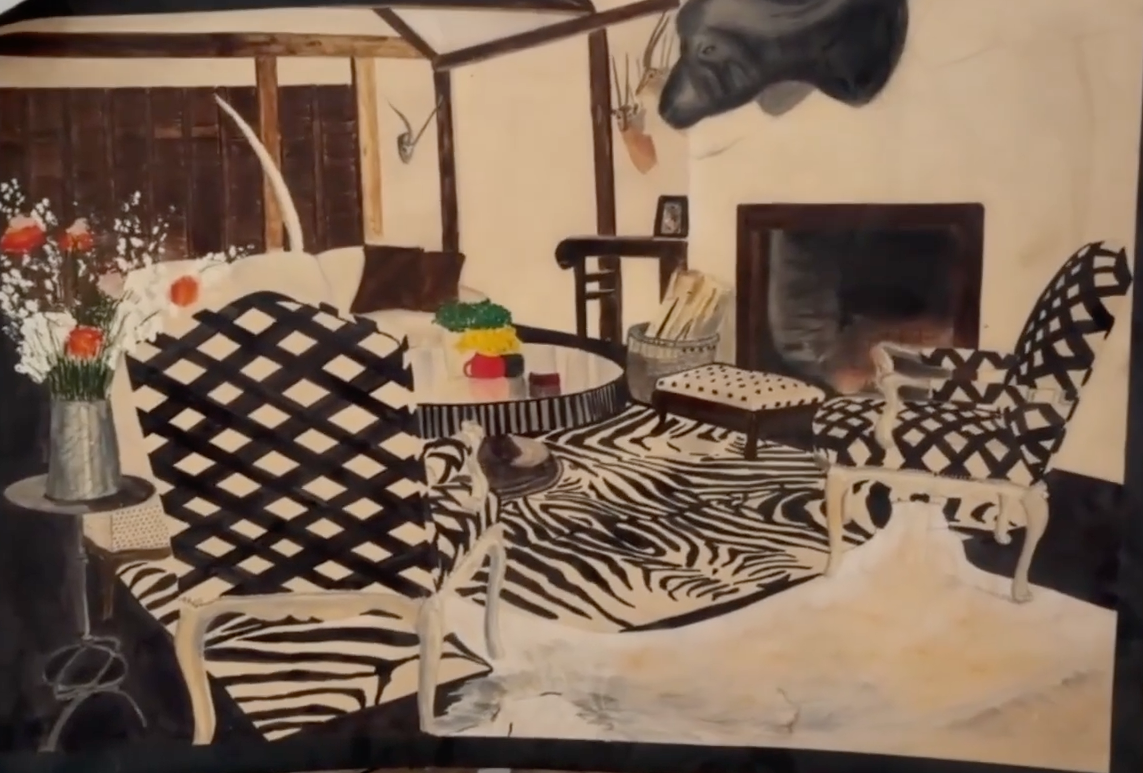
Considering that Joyce has spent a lifetime saving just about everything -- including a huge collection of art materials, books, shells, and more -- it was a big leap to consider that those webbed chairs might belong in a dark place.
Joyce also tries to explain why she held onto a broken portable audiotape cassette player. In case you don't remember what that is, voila!
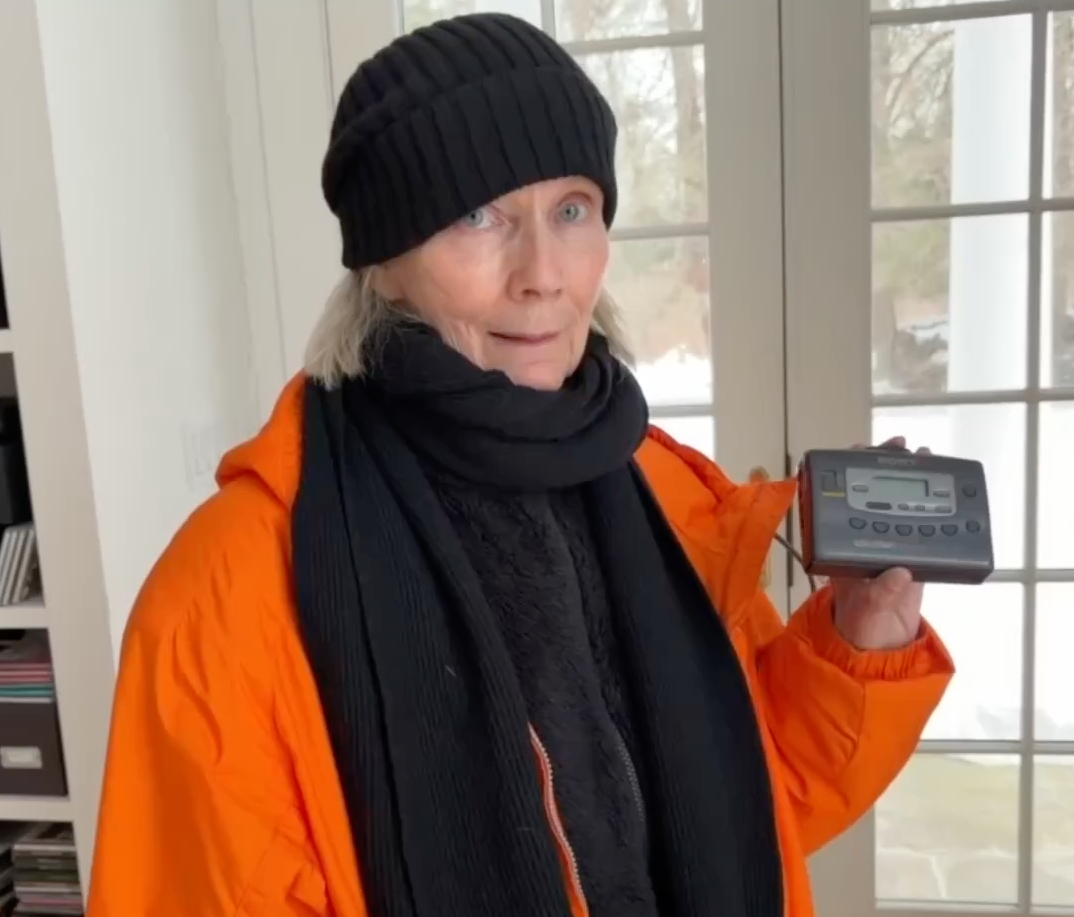
The outcome of her daring treasure toss is as tense as an Olympic snowboard half-pipe competition -- but with fewer spins through the air.
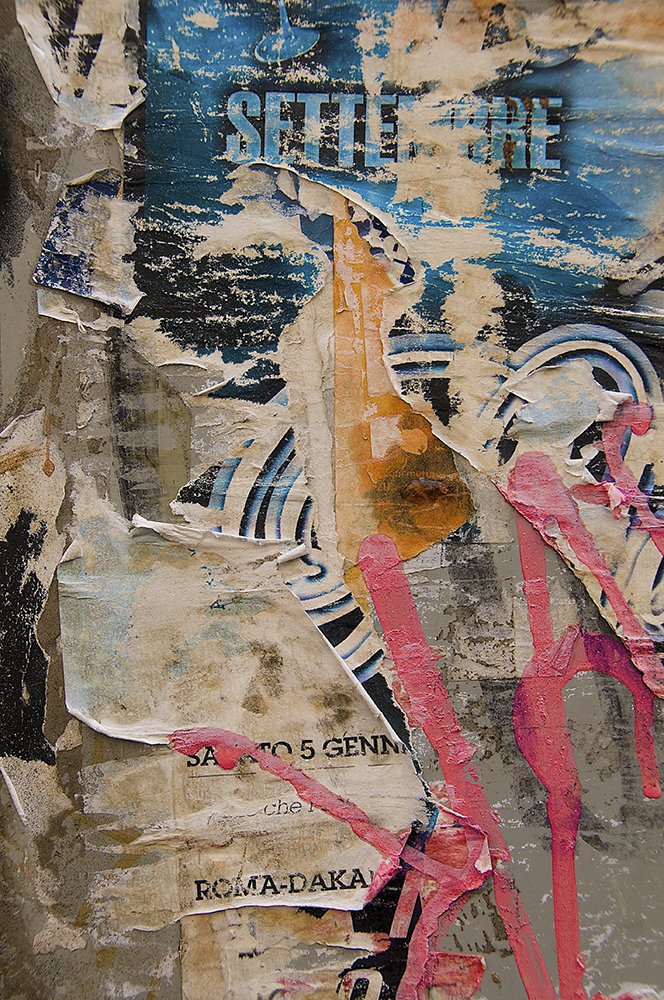
Taking you from the ridiculous to the sublime, as we so often like to do on I Couldn't Throw It Out, here's an example of Joyce's profoundly beautiful Roman wall photos -- showing what's left of layers of posters and graffiti that were on the wall over the years.
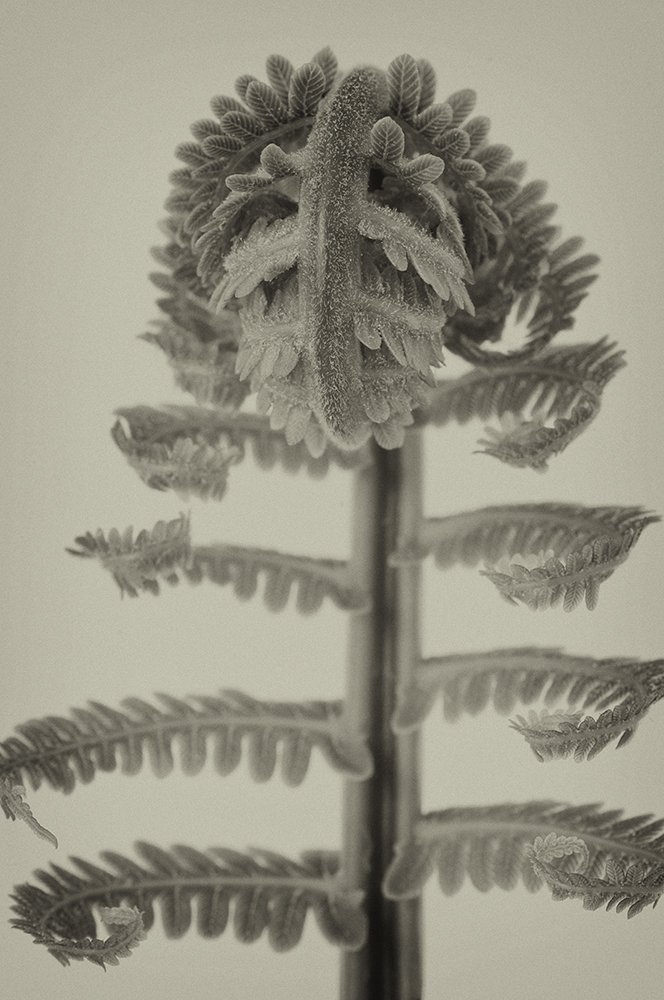
And here is one of Joyce's intricate fern photos.
You can see much more of Joyce's artwork at: joyceseymore.com
By the way, if you have something you should have thrown out -- but didn't -- watch out. For our next mini-episode, we may be coming your way.
Have thoughts about this episode? Send us a text
More info, photos, and transcript: throwitoutpodcast.com
Don't miss a thing: Join our mailing list
Do you save stuff you can't throw out? Tell us about it
Want to show support? Please rate/follow us wherever you get your podcasts.
I Couldn't Throw It Out, Season 3,Episode 39
Post-Olympics Outtake: The Treasure Toss
Michael Small:
In this mini-episode of I Couldn't Throw It Out, I ambush a friend at home and convince her to compete in a post-Olympic event: The very challenging Treasure Toss. Here's a quick snippet of her tense and exciting feat...
[Interview excerpt begins]
Michael Small:
She drops it in. She's in for the drop. Oh my God. She did it.
Joyce Seymore:
Look at this, Michael.
Michael Small:
This is like a twizzle on skates.
[Interview excerpt ends]
Michael Small:
To hear about the life-long training behind this display of moral and physical strength, just keep listening. Or, if you want to experience the full visual drama, you can watch all eight minutes of the video at throwitoutpodcast.com
[Song excerpt begins]
I couldn't throw it out
I had to scream and shout
Before I turned to dust I've got to throw it out
[Song excerpt ends]
Michael Small:
Hello everyone, welcome to a very special episode of I Couldn't Throw It Out, something I've never tried before. I'm just here with my friend Joyce Seymore. Hello Joyce. And we are in her art studio. Joyce is one of the most amazing artists in America. She generally does collages and photography. And you may notice that she also is a person who likes to save things, a little bit like me.
Joyce Seymore:
These are for collages, Michael.
Michael Small:
Okay, defend yourself, please.
Joyce Seymore:
A collage artist can have all kinds of things. There's a box of... Here are pieces of paper from a Roman wall. And here are some torn-up letters that I got years ago. I have a whole box of them that I'm going to do something with.
Michael Small:
Something.
Joyce Seymore:
Yes.
Michael Small:
And let's see, is there something we can see here? These are some of the works. These are walls that you photographed, right?
Joyce Seymore:
Yes.
Michael Small:
And you photographed these walls where?
Joyce Seymore:
In Rome.
Michael Small:
And what's amazing is that that is literally graffiti that you saw on the walls.
Joyce Seymore:
Yes.
Michael Small:
And that you turned into art. Joyce's artwork is just amazing. But Joyce is a woman with a problem. Joyce, what is your problem?
Joyce Seymore:
My problem is I can't throw anything away. It pains me.
Michael Small:
Welcome to the club.
Joyce Seymore:
There are all my notebooks from every class I've ever taken, including Art 101 is up there someplace from 1964.
Michael Small:
So I think that you definitely have a challenge here. But I believe today we have a little bit of good news because what did you decide to do today?
Joyce Seymore:
I decided one thing I was going to throw away. One thing. Well, actually two things.
Michael Small:
Yes.
Joyce Seymore:
And the one thing is a drawing I had to make for a design course.
Michael Small:
How long ago did you make this thing?
Joyce Seymore:
I did that in about '69 maybe.
Michael Small:
You've held onto it since 1969.
Joyce Seymore:
I did it in LA. It moved to two apartments in New York. It moved to Connecticut, two houses in Connecticut. And now it's been in my basement for years.
Michael Small:
Okay, well, I think America wants to share this historic moment. So we're now gonna go downstairs and we are going to throw something out, yes?
Joyce Seymore:
Yes, I feel sad for it.
Michael Small:
Okay, here we go. It is now time for the big moment. Let's go downstairs All right, Joyce?
Joyce Seymore:
I hope I can do it.
[Brief music]
Michael Small:
Here we are downstairs. We are about to take this big moment to throw out a few things. I'm just showing you first that Joyce really does like to collect not just art, but also books. And there are a few books over here. They're her art books.
Joyce Seymore:
I've been collecting them since 1963.
Michael Small:
So we are about to approach the object that is going to be thrown out. As she told us, it's been held onto since 1969.
Joyce Seymore:
Maybe 68 actually.
Michael Small:
There it is. What is this?
Joyce Seymore:
This was for rendering course that I took in design school. I thought at the time it was not so bad, but it's been on the floor of our basement. It survived a few floods and I feel sort of sad to see it go, but if something has to go.
Michael Small:
Why did you hold on to it?
Joyce Seymore:
I don't know, I guess I feel it's sort of a part of my life, but actually it wasn't a particularly happy part of my life, so it's just as well.
Michael Small:
This actually was a photograph, right?
Joyce Seymore:
No, it was in House and Garden magazine.
Michael Small:
What did you do to it?
Joyce Seymore:
Well, it was, it was small. I enlarged it and cropped it and had to draw it.
Michael Small:
You drew this?
Joyce Seymore:
I mean, it's not a photograph. I drew it and it's painted. I painted it.
Michael Small:
Did you not tell me that you did well in this class until you brought in this piece?
Joyce Seymore:
No, I did well in all my other classes. I mean, I can't draw.
Michael Small:
And yet you still held on to it. I would say if we had to, all of us think of a good word for this, would say unremarkable. Anyway, by coincidence, when I came here today, we made a decision about something else that you're going to throw out.
Joyce Seymore:
Yes, this one is easy because we couldn't get it to work.
Michael Small:
It's a portable cassette tape player, something that is no longer useful. Why did you hold on to that?
Joyce Seymore:
Because I have a lot of interesting cassettes. And the other day I really wanted to listen to one of them and I had given away my larger boom box. I also found this one.
Michael Small:
Now you're keeping that one.
Joyce Seymore:
I'm keeping this one because it works.
Michael Small:
Yes, and that one is a particular style that was created for people who would carry it with them when they were swimming.
Joyce Seymore:
Yes, I don't know why.
Michael Small:
Because it's waterproof. What's on these tapes that's so important that you can't just go on Spotify and get it?
Joyce Seymore:
Well, I had a yoga teacher many, many, many, many years ago and she made these tapes and I had the urge to listen to it. Then I found out that I have some more very interesting tapes on meditation. So anyway, now I can listen to them.
Michael Small:
Okay, I think the world benefits from you listening to your meditation tapes. I think we now understand what the mission is, so let's take that unremarkable work of art and let's go out the door and let's head towards the trash can. It's very cold out, so we're bundled up and we're going out. I wish I had the courage to do what you're doing.
Joyce Seymore:
I think it's time.
Michael Small:
Yep. She drops it in. She's in for the drop. Yes. Okay? And this. This is like the Olympics. Oh my God. She did it. She broke it. She's doing it with a lot of style. She's going for the fold.This is like a twizzle on skates. You're not gonna make a collage out of those.
Joyce Seymore:
No.
Michael Small:
Out it goes. It's being thrown out. There she goes, people. This is one of the best throwing out excursions that I have been on. I'm feeling very inspired because we can give up on the past and we can move into the future. Wow, she's really going at it, There we go. Okay.
Joyce Seymore:
Maybe my garbage man might want to keep it.
Michael Small:
You may not go back into that trash can to get it. That is there for good.
Joyce Seymore:
Yes.
Michael Small:
All right. Congratulations, Joyce. Well done.
Joyce Seymore:
Thank you, Michael, for being so inspiring.
[Song excerpt begins]
I couldn't throw it out
I had to scream and shout
Before I turned to dust I've got to throw it out
[Song excerpt ends]
END OF TRANSCRIPT
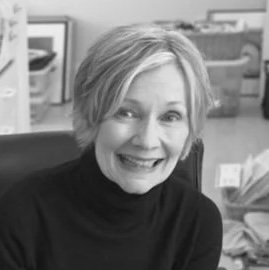
Artist
Photographer Joyce Seymore has explored the world through her camera lens for over 50 years. Her passion for photography began at the University of Florida, where she majored in art history and studied with master photographer Jerry Uelsmann, who inspired her love of darkroom printing. Seymore has created a decades-long series on ferns, whose subtle variations continue to intrigue her. She has continued her botanical photography while also exploring urban landscapes. In 2011, she was invited as a Visiting Artist to the American Academy in Rome, where she spent seven weeks documenting the graffiti and tattered posters on the city’s ancient walls. Forty of these photos were included in her open studio at the Academy and later at the National Arts Club in New York. More recently, she has traveled many times to India to explore the vibrant surfaces of its cities.



