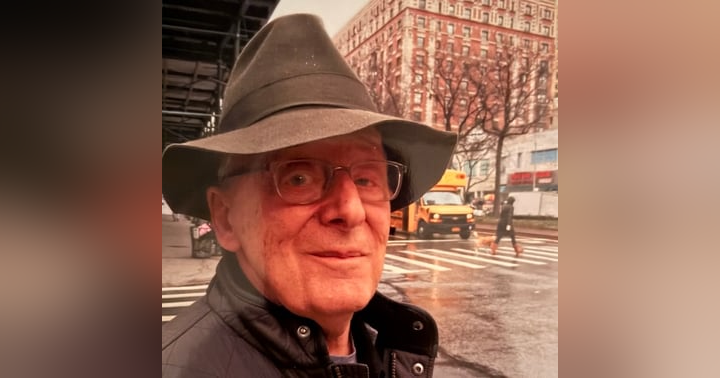
What a much-loved partner left behind
Janny Scott explains how saving things helped her grieve – and preserve her connection with journalist Joseph Lelyveld


(Watch the entire episode -- and everything discussed -- via the video above. Or just listen, using the audio player below the video.)
When someone you love dies, the grieving process is different for each of us. But one thing is always the same: You've got to decide what to do with the things your loved one left behind.
Janny Scott experienced this in January 2024 when Joseph Lelyveld, her partner of 19 years, died from complications of Parkinson's Disease.
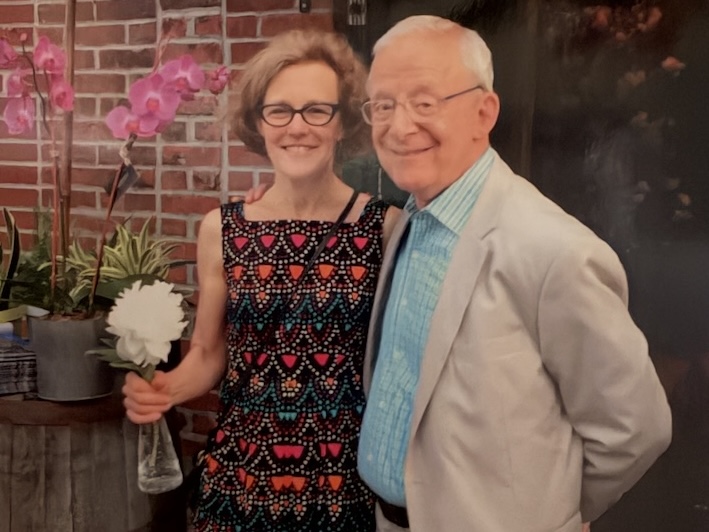
Joe had been a star at the New York Times, eventually becoming executive editor (the top editorial position) and winning a Pulitzer Prize for Move Your Shadow, his 1985 book about apartheid South Africa. From his career and travels, he left behind some genuine treasures. But mostly, Janny was surrounded by everyday items that filled their apartment, especially the contents of Joe's small home office.
So Janny made a deliberate decision. She'd leave Joe's office exactly as he left it, creating what she calls The Museum of Joe.
In this episode of I Couldn't Throw It Out, Janny – a former New York Times and L.A. Times reporter and author of A Singular Woman, the bestselling biography of Barack Obama's mother – shares what she saved and why.
Listen in to understand how one of us – and maybe all of us – can keep a connection to people we've loved through the things we never plan to throw out.
- - - - - - - - - - - - - - - -
More about Joe Lelyveld and Janny Scott:
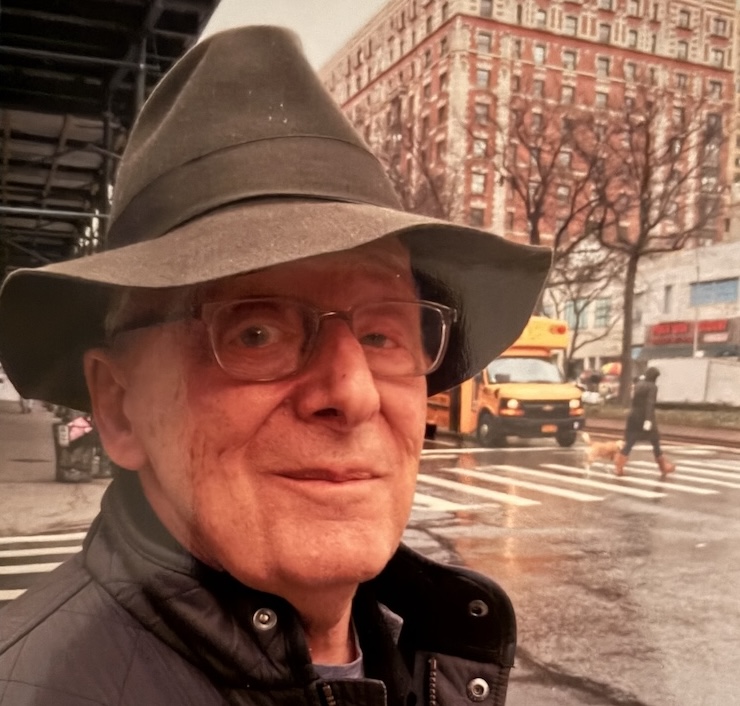
Check out my blog post about Joe's life and books...
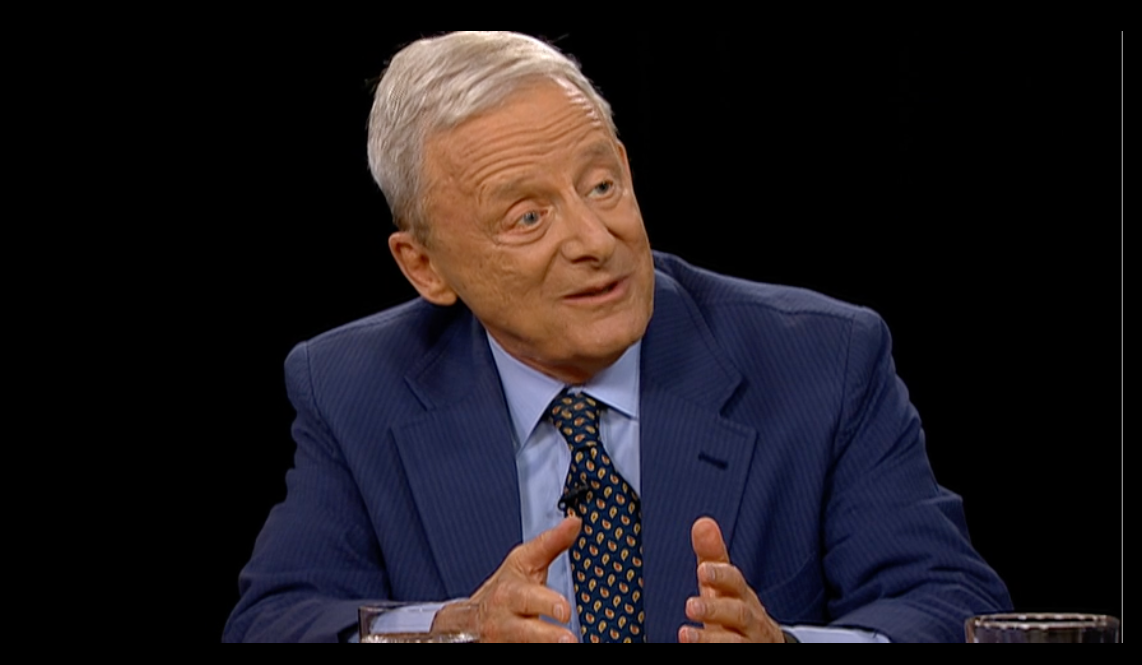
Watch Janny and Joe, talking about their books on the Charlie Rose Show...
Read Janny's terrific books...
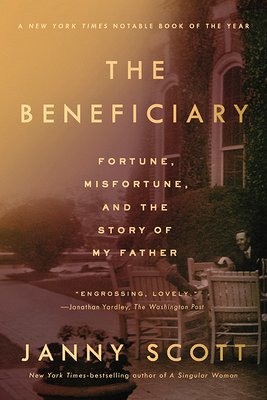
The Beneficiary is the story of Janny's family, including her grandfather who founded the Pennsylvania Railroad and her grandmother who was an inspiration for the play and movie The Philadelphia Story. It's extremely entertaining and emotional too, fascinating from both a historical and personal perspective. Get it at bookshop.org
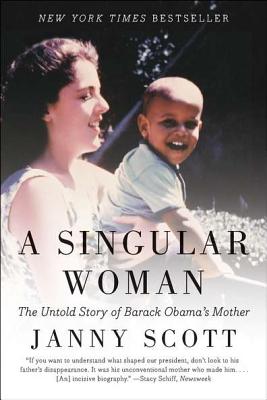
The surprising story of Barack Obama's mother started as an article that Janny wrote for the front page of The New York Times and then became this bestselling biography. Get it at bookshop.org.
Have thoughts about this episode? Send us a text
More info, photos, and transcript: throwitoutpodcast.com
Don't miss a thing: Join our mailing list
Do you save stuff you can't throw out? Tell us about it
Want to show support? Please rate/follow us wherever you get your podcasts.
I Couldn't Throw It Out, Season 3, Episode 38
Memories of Love: Janny Scott and Joseph Lelyveld
Michael Small:
In this episode of I Couldn't Throw It Out, we consider a very difficult question. What to do with the things left behind after the death of your partner? Of course, there's no common way to respond to that kind of loss, but I hope it'll be helpful to hear how one journalist is honoring her partner with the very deliberate decisions she made about his possessions.
[Interview excerpt begins]
Janny Scott:
The idea of living in a place where there's no trace of Joe, which is kind of what people sort of think you're supposed to do -- you know, you can reduce it to a few photographs on a table -- it's just like inconceivable to me.
[Interview excerpt ends]
Michael Small:
To hear their story, keep listening.
[Song excerpt begins]
I couldn't throw it out
I had to scream and shout
Before I turned to dust I've got to throw it out
[Song excerpt ends]
Michael Small:
Hello and welcome to I Couldn't Throw It Out, the podcast where we dig out the things we've saved forever and try to throw them out. Actually, that's what we do most of the time. And today is different. This time, we're talking about things that are saved and there is no plan to throw them out. None. These are things related to people who were greatly loved before they died and the objects they left behind have value that is really too great to measure. I wanted to talk about this because a few of my friends and family members have lost their partners and other people they love. And from what they've told me, the grieving process may include preserving things from the person who is gone. These things bring back memories that can be comforting or uplifting or otherwise make a person feel better who is missing someone who is gone. So that's why I am here with my friend, Janny Scott. Janny told me about the unusual way she preserves memories of her partner. He died about two years ago on January 5th, 2024. So I asked if I could visit her apartment in New York City to see what she saved. And that is where we are right now. Janny, thank you for inviting me into your home.
Janny Scott:
You're welcome, Michael. It's nice to have you. Thank you for asking to come.
Michael Small:
Before any of us can understand what you've saved and why, we need to have some background. So I want to start by talking about the person you lost. He's someone who had a huge impact, not just on you personally, but actually on our entire world, which is a pretty stunning thing to say about someone. So could you tell us a bit about who he was and some of his accomplishments?
Janny Scott:
Uh, yeah, he was, uh, Joseph Lelyveld. He most famously was executive editor of the New York Times from 1994 to 2001. He had to leave at the age of 65, that job, because that's the requirement at the Times. So he could have stayed on, but he decided to go off and write books. But he happened to leave five days before 9-11. The biggest story in New York in a long time. He worked at the Times his entire career. Started off, I think, as a clerk and very quickly at a young age became a foreign correspondent in Congo, South Africa, India, Hong Kong, London, and all over the place. As a result of that, he then became the foreign editor of the Times and then eventually the executive editor, during which time the Times won a bunch of Pulitzers. And I think he was widely admired. He then left and wrote four books. actually he'd written one book earlier. After he'd finished his second tour in South Africa, he wrote a book called Move Your Shadow that won a Pulitzer Prize and is considered sort of one of the great books on apartheid South Africa. Then after he left, he wrote three books. One was a kind of memoir of a period in his childhood called Omaha Blues where he had a relationship with a particular sort of father figure. Then the second book was a book about Gandhi called Great Soul. And then the third one was about the last 15 months of Franklin Roosevelt's life. So yeah, he affected a lot of people within the Times and beyond. His books were widely read and his corresponding was pretty important in its time.
Michael Small:
I just want to point out one thing about the memoir that you mentioned. He partly wrote that memoir because he found a trunk full of family items in the synagogue where his father was rabbi and the items themselves brought back memories and helped him piece together the past. That's kind of what we do here. So we were kindred spirits on that level, although on all other levels, he was beyond, beyond almost anyone we've ever met in our lives. At the end, he died of Parkinson's. Is that right?
Janny Scott:
Yeah, complications of Parkinson's.
Michael Small:
Was that something that went on for years?
Janny Scott:
He was diagnosed in early 2018 and he died, as you said, in January, 2024. So a six year long decline. I used to refer to it as Parkinson's being the disease that took away gradually everything that you like to do, but didn't kill you.
Michael Small:
For him, someone who had so much going on in his mind, that must have been quite a challenge. He accomplished so much and was such an impressive person, but I want to say that you too are extremely impressive. Do you want to say a little bit about where you worked and what you did?
Janny Scott:
Seems a little meager compared to Joe's accomplishments. Let's see. I first met Michael Small in college.
Michael Small:
That's a big moment in your career.
Janny Scott:
It was really the high point, downhill from there. Then I went and worked in journalism in all sorts of different capacities. I went to work for the LA Times in San Diego, LA and New York. And then I defected to the New York Times and worked there for 14 years until I wrote a story about Barack Obama's mother. It was during his presidential campaign. And I wrote a piece that ran on the front page about his, at that point, completely unknown mother who had had rather surprising life for the mother of a presidential candidate in the United States. She had spent most of her adult life in Java working as an anthropologist and had raised two children as a single mother, a fascinating life. So I wrote that piece and it ran on the front page of the Times and I got a book offer that day. And so I took a book leave and that was so much fun that I thought, Hey, this is a piece of cake. I'll do another. I decided rashly not to go back to the Times, but to do the second book, which was a family memoir. And while I was wrapping that up, Joe was diagnosed.
Michael Small:
I just want to throw in a few things that you left out, which is that you were part of a team that won a Pulitzer Prize for reporting about race. So there are two Pulitzer Prize winners who were living in this apartment.
Janny Scott:
Well, I have to point out that to win it as part of a team is not the same thing as to win it individually.
Michael Small:
I'd settle for it if it was me.
Janny Scott:
I'm not complaining.
Michael Small:
Yeah, it's impressive. And also I want to mention that your book about Obama's mother was a bestseller. And then that your memoir called The Beneficiary is one of the most beautiful and interesting memoirs I've ever read. As you know, it was full of surprises for me because I somehow got in my head that you were a scholarship student in college. And then I find out that your great grandfather built the Pennsylvania railroad, one of the most successful businesses in American history. Your grandmother at least partially inspired the movie The Philadelphia Story.
Janny Scott:
I had good material. I needed to use it. Well, I'm sorry I disabused you of the misapprehension that I was a scholarship student.
Michael Small:
But it's a wonderful book, The Beneficiary, highly recommend it. So those are a few of your public accomplishments. I don't want to leave out that both you and Joe were married previously and each of you has two children from those marriages. It's easy to skip over that when there are so many big public achievements, right? But I'm going to channel my mom right now and I'm going to say that bringing four people into the world is probably the best thing that either of you ever did.
Janny Scott:
Thank you, Michael. I think he and I would probably both agree that those are the biggest things we did.
Michael Small:
So finally getting to your relationship with Joe, which is important to discuss before we look at the things that are saved. You were together in 19 years, is that right? Can you talk about how you met?
Janny Scott:
Yes. Yeah. So the first time I met him was after I started work for the New York Times. The Metropolitan editor invited new people to a brunch at his place on the Upper West Side. My daughter was about one and a half at the time. I had her with me. I was taken over to meet Joe and I was holding Mia, my daughter, in my arms. And Joe was standing there with a plate of, you know, bagel, cream cheese, lox, et cetera. And I was introduced. As we were talking, Mia reached over and plucked a slice of cucumber off Joe's plate and started eating it. When I remember that moment, to me, it's like a scene from a Harold Pinter play, specifically Betrayal. You know, except it's not a betrayal story, where the movie or the play works its way back to the scene with the cucumber.
Anyway, yeah. So I worked for Joe for the seven years that he was executive editor. I was just a lowly serf, but I always really admired him, liked him. I had a friendly relationship with him. A lot of people found him very intimidating. And for some reason I absolutely never did. I just thought he was great and fun to talk to, strangely, and funny, which not everyone agreed with me on that. So then let's see, he left. His successor was a guy named Howell Raines who within a couple of years had been fired. And the publisher, Arthur Salzberger, brought Joe back for a couple of months to calm things down and get the place back on track until they could appoint a new executive editor. Of course, I was happy to see him at that time. And we had lunch a few times. He left. His wife was very ill. She had breast cancer that dragged on for seven years. I mean, she'd had it for quite a while. So sometime after that, I can't remember exactly when, but she died. And I wrote to him and we agreed to get together.
As I said, we'd had lunch in various restaurants from time to time. And he said, let's have a picnic. We'll meet at the Eleanor Roosevelt statue in Riverside Park and you bring the sandwiches and I'll bring the lemonade. So I did that and we met and we went to a picnic table and talked for two or two and a half hours and then walked for a while north. And then I had to get back to work. And so we went up to the nearest subway station at 86 and Broadway and standing outside the entrance of the subway, I confess I have always had a feeling that if you feel strongly about someone, you should tell them because God knows what might happen and you may never tell them. This is based on experience I had when I was much younger, someone dying and I thought, what a shame. I never said what I felt. Not that this was a comparable thing at all. And so I just said, I'm going to get myself in trouble. I was after all married, but "I love you." And he looked at me. And there was a long pause and he said, "I love you too." And then I got on the subway and I went back to work. And I wondered for many, a long, long time, and I don't think I ever asked him, strangely, did you at that point love me? Or did you feel you had to say it? But anyway, it all went from there. And I have to say that after he died at his memorial service, an editor came up to me and said, "I want to tell you a story that I've never told you." He said, "When I was sitting in those news meetings that all the top editors were in back many years ago, before you and Joe were together, whenever your name would come up, I would just see this little smile on Joe's face." And he said to me, "I'm not very good at this, but I had the distinct impression that he had a crush on you." Hearing that after he died, it was very touching.
Michael Small:
Well, I love that story. It's very romantic. It's also interesting because your backgrounds are not exactly identical. He was something like 17 years older than you, is that right?
Janny Scott:
Yeah. 18 years older and yeah, he was the son of a rabbi and I grew up in this like WASP aristocratic thing. However, we were totally in sync and I think he would have said the same thing. And we did have certain similarities. We both went to the same college. We both majored not only in the same major, but the same subdivision within it, British history and literature. And as I say, we were completely in sync and I don't think he would disagree with this.
We had a completely happy, utterly without conflict relationship for a very, very long time. Basically the 19 years, although God knows it got a little tense at times with the illness. And we had my children living with us. So there were potential areas for conflict. But when I fell in love with him, he was not executive editor of the New York Times anymore. He wasn't under the same kind of pressure when we ended up together. You know, I eventually left to write these books and we had this happy working life with an office around the corner that we shared or other offices that we didn't share. So we were sort of free to be extremely happy without a lot of the normal stress that I think would have existed had we been together when I was younger or he was.
Michael Small:
Was that ever intimidating to be living with someone like that?
Janny Scott:
No, I thought he was extremely smart, but he never pulled that on anybody, or at least in my experience. I suppose there were people at the Times who might've felt that he didn't suffer fools, but I can't really say that that was something that was widely said. No, he just, he thought in many ways differently than other people, and so he had a lot of original thoughts. He also had a deep moral core, which I don't know exactly where it came from. He was the son of a rabbi, but he was not himself religious. His father was involved in the civil rights movement. He was famously hit over the head with a tire iron in Hattiesburg, Mississippi during the civil rights movement.
Michael Small:
His father was.
Janny Scott:
Father, yeah, not Joe. So clearly they grew up with a kind of awareness of issues that were probably not likely to be discussed in my family household. So no, I never felt intimidated by his intelligence. What I felt was, somewhat baffled as to why he would decide to spend any time with me.
Michael Small:
Please.
Janny Scott:
But since he reassured me about that, I had no reason to question it because in the way he looked at me, he conveyed utter love. So I never doubted it until Parkinson's did its thing and froze his facial expressions. And that was a very difficult thing to deal with because he wasn't a hugely talkative person. He was thinking a lot is the impression I got. There were always interesting things happening in his head. And so his expressions were so key to my sense of how he was reacting to me at any moment. So the loss of that was very hard for me to deal with.
Michael Small:
That totally makes sense. And before we move on to looking at the things that remind you of him that you've saved, I'm just curious, is there a story you would tell that comes back to you of just how much fun you had together, how great your relationship was? It doesn't have to be a dramatic story. can be about something non-dramatic.
Janny Scott:
I'm not sure that something exactly in that line comes up, but we traveled a lot together. You know, he'd spent a lot of his adult life living abroad and he wanted me to see a lot of the places where he lived. He'd gotten a Fulbright early on and gone to Burma in the late fifties. And so we went to Burma and traveled all over Burma. We went to Turkey, made multiple trips to Japan. We spent fantastic three weeks in South Africa in which I met a lot of the people who had been sources of his when he was a foreign correspondent there. Just incredible travel and he had an extraordinary set of friends. I remember arriving in Lisbon one year just for like four days. He was probably 79 then, 78 or 79. We arrived at the airport having flown overnight and grabbed our rolling suitcases and got on the subway or whatever they call it in Lisbon and then got off where we were somewhere near a hotel. And between us and the hotel, there was a deep gorge, which with like a switchback kind of going all the way down into the gorge and then all the way up the other side. We've been up all night and he's 78 or 79 years old and we're trudging up the other side and we get close to the top and he says, "When I'm 80, I'm not going to do this anymore."
Michael Small:
But he probably did.
Janny Scott:
Well, unfortunately, 80 was when he got sick. Yeah.
Michael Small:
Definitely a relationship that expanded your horizons, literally.
Janny Scott:
Everything about it expanded. It changed me. There's no question. It changed me in very deep ways, for which I feel extremely fortunate.
Michael Small:
Well, I think we're now ready to look at some of the things that remind you of Joe. We're going to look at what you saved, and here we go.
[Brief theme music]
Michael Small:
Okay, so Janny, here we are with a few of the things you've saved. Can you explain what is this place that we were looking at?
Janny Scott:
I should make it clear that I still live in the apartment that Joe and I completely renovated when we got together and moved in together with my kids. So I'm surrounded by things that come from Joe's life. But this particular thing is a tiny office that was his. He actually didn't do much writing in here because it was too small and claustrophobic. And there's a bigger office, which I got, only because Joe was sensitive about my children and not wanting to be kind of out of the way. He wanted to be in the flow of our lives together. So he chose this tiny little closet-like place off the front hall. But he filled it with some of his favorite books that were most important to him, photographs of people who mattered to him. It was like his administrative office, I guess. And so all sorts of little bits of notes to himself and business cards and stuff like that. And I just thought, I don't need this room in my life now. I live here in this apartment where I lived with Joe and my two children by myself now because my children are grown and he's not here. And I thought, what's the point of emptying this out? And I figured I'll just keep it exactly as it was when he died. I call it the Museum of Joe.
Michael Small:
Can we focus in on a few of the things? I know over on the side here, there's some things relating to his work that you pointed out.
Janny Scott:
Here's a picture of him, I believe, at his first overseas assignment in Congo, which was a pretty troubled place at the time. I don't know what he's doing with that weapon. And then here are lots of friends of his journalism and other friends of his who are dead. I'm here, but I'm not dead at moment. That is his wife there, Carolyn, at the Great Wall.
Michael Small:
Right down here?
Janny Scott:
Yep. And this is his mother. and here he is with his little children who had this very international upbringing. This I'm assuming is probably in India, but I'm not absolutely certain.
Michael Small:
There's the two of you up there.
Janny Scott:
Yes, there's a lot of pictures of the two of us or me in here. Here, this is interesting. He covered this event and that's Deng Xiaoping, the Chinese premier at a rodeo in Texas. Joe, for a while, was writing a column for the Times Magazine and I think he went down there for that. yeah. This is when he was thrown out of South Africa because he wasn't toadying to the apartheid government. And that's the letter. And this is a note from Joe DiMaggio.
Michael Small:
Whoa.
Janny Scott:
I can't remember how he came by that. He was a baseball fan.
Michael Small:
And he loved baseball.
Janny Scott:
This I think was the first thing I gave him.
Michael Small:
What is it?
Janny Scott:
It's a little container. I gave him some better things over time. But that was the first.
Michael Small:
He kept it, I'll tell you that much. All these things tacked up here, you'll just leave those.
Janny Scott:
Well, I thought about, I thin them out and get rid of the notations of dentist appointments from 2020 or something like that? And I'm like, here's an Audible membership for my kids. It was very difficult to know what to give Joe, and especially when he got ill. And so they got him an Audible membership, but he never was interested in Audible or audio books. When he became sick, he liked me to read to him. So I thought about getting rid of some of this stuff. And then I think like, tidy up the museum?
Michael Small:
Yeah, I guess not.
Janny Scott:
It's also, that's the whole thing. That's what I want to preserve is this is all different parts of his personality and his self and the things he cared about and funny, sentimental things. And there are other things like that, of course, around the apartment, but this little concentration here, it's just nice. I come in here sometimes and just look around. And when Nita comes, his daughter who lives in Maine, she likes to come in here too.
By the way, these are interesting. He did a piece for the Times Magazine with a photographer named David Goldblatt. And it was about the enormous distance people had to commute from the townships to their jobs in Johannesburg where they weren't allowed to live. These were taken on the buses overnight. They'd be on the bus for seven hours. They'd work all day. They'd get back on the bus. They'd sleep for three hours at home. And they'd get back on the bus and do the same thing over and over again.
Michael Small:
He describes this in great detail in the book, Move Your Shadow, if you are interested in South Africa, before apartheid went away. It really is this portrait of that time and these photos make it come to life. I wish the photos had been in the book.
Janny Scott:
This is their cabin in Maine. They didn't have much money. He was young and he read about the second poorest county in the United States, which at the time was Washington County, Maine. And they thought, we'll be able to find some waterfront property in the poorest county. And he went up there for one weekend and discovered a piece of land that was for sale that was being subdivided into long narrow strips. And at the end of each strip was land on what's known as the Bold Coast of Maine, which is way up by Campobello, incredibly rocky, relatively undeveloped. And they were able to buy, basically by whatever that phrase is, "take back paper." The seller agreed to basically give it to them on the promise of being paid later. And so they acquired this piece of land, but they didn't have any money to do anything with it.
So they would camp with their children on this piece of property. And eventually they got enough money to build this cabin. And in a further Joe story, he'd been wanting to build the house, but he had no idea how you find an architect to design something. And he certainly didn't need anything grand. He had seen an article about a particular architect, I think, named William Turnbull. And he was in San Francisco for a political convention. And he walked by the office of William Turnbull.
With this fantastic naivete, he walks in and he says, Do you have any plans that somebody else had that you would sell to me for less? And they said, Well, you know, sir, that's not the way architecture works. And then someone, as he told this story, someone said, Wait a minute, there was that fisherman's shack that we were going to do and they didn't do it. You can have these for $50 or $500. So he had the plans. He took those to Maine where people on the coast of Maine, they have what's called occupational multiplicity. They could do five different types of work. And they knew some lobster fishermen that they were close to up there. They gave the plans to the lobster fishermen and they built this fantastic cabin. There it is, it's only half built then, but it's very beautiful and with the most amazing view out this way of the rocky coast.
Michael Small:
Wow, so you've been there.
Janny Scott:
Many times, yeah. And this is Joe's father, Arthur Lelyveld, the rabbi, with Martin Luther King.
Michael Small:
There's a lot about his father in the book Omaha Blues, which I also recommend, and you will understand more about the meaning of this photo. Well, when you walk by here, do you notice it or do you not notice it anymore?
Janny Scott:
Of course I notice it. As I say, the apartment is full of things that were from his life and from our life together. And I feel deeply connected to those things. I definitely subscribe to the view that you don't get over a person. They are part of you forever. And Joe is very much a part of me. And I hope he always will be. So yeah, the other day I was looking through a bunch of photographs. I took a million photographs of him. And I was looking through photographs that I hadn't looked at in a while and it was like, My God, I have this whole repository of fantastic pictures of him just gazing at me. So yeah, I'm happy always to be reminded of Joe, to think about Joe. That's not what I'm, I'm not doing that with my life, but I like it.
Michael Small:
I feel some people might be sad to see so many reminders of the person they lost.
Janny Scott:
It's so true. People are very different. I know a woman who, her husband died, and she could not be alone in the apartment at night for dinner by herself for over a year. The idea of being alone in the apartment was just unbearable to her. She had a wonderful relationship with him. I had the opposite experience. I'm happy to be in this apartment. I love having people come. I have no desire to flee. Yeah, I don't know how you explain it.
Michael Small:
Do you ever think of like, well, eventually I'm going to have to do something with these things or will they go to his children? Have you thought about that or you just like...
Janny Scott:
Well, I'm very close to his younger daughter, Nita. But my mother recently died and I know how much appetite younger generation has for older generation stuff, not much. There's some few things in here that actually Joe left to his daughters that Nita has said, you just keep them because they're fantastic Indian miniatures from his collection of paintings. His other daughter, unfortunately, has Alzheimer's and is in a memory care unit. Yeah, at some point this stuff will go and some of it will go to Nita and the rest I suppose, I mean, I don't know. I don't know what, it depends on what happens to me.
Michael Small:
Does the New York Times have any kind of archive that any of this would belong
Janny Scott:
Joe's papers, such as they were, went to the New York Public Library, which has a lot of New York Times executive editors' papers. But unfortunately, somehow in the transition to his successor at the Times, many of his papers were disposed of. So it was really about eight giant boxes after he died that I arranged to have go to the public library. And they were mostly about his books and stuff. There was one box that was communications from while he was executive editor.
Michael Small:
You said there are other things around the house. What other kinds of things did you save from him? Anything that comes to mind?
Janny Scott:
I didn't really throw much out. I got rid of his clothes, almost all of his clothes. That took a long time though, because I didn't feel like doing it immediately. We have a massive amount of books, his and mine, but a lot of them his. There's a whole wall of them in there. And to me, I'm paralyzed about what to do about them, because I'm not going to be reading a lot of them. Some of them are very specific to his interests and experience, like a whole bunch of books about Burma from the late fifties, and old books about India, a lot of books about China. I have gotten rid of some of these, but it's not like there's a place that would really value having them intact as a collection. So then I feel like I'm frankly cannibalizing his brain. It doesn't feel right. So I'm very torn about what to do about all that.
Michael Small:
Did you and he discuss at all what would happen after he was gone and did he give you any direction about his things?
Janny Scott:
He did not talk about making plans for his demise. He wasn't particularly interested in talking about it and to the extent that we discussed it, which I, of course, was not eager o talk about either, whether he wanted a memorial service, that kind of thing. And he said that that's for you guys to figure out. So I think that was kind of his attitude. He wasn't a big "legacy" kind of guy. In fact, I'm sure he would have disdained that whole idea. But on the other hand, he was very attached to many of these things and the fact that Nita would want that stuff probably be very nice for him.
Michael Small:
And these things, I think he's attached them because they held memories. It's interesting with him gone, you're the holder of the memories now.
Janny Scott:
Absolutely. Yeah. He used to say that about Carolyn's death, that the weird thing about it was that you had all these shared experiences and now you were the only one left who knew them. That kind of made sense in the abstract, but now I get it and I don't have the kind of memory that he has. And a lot of these things are things I heard about from him, but that I didn't have the first-hand experience. So I like having them because they all remind me of him and they don't get in the way or anything.
Michael Small:
It's interesting, one of the things about writing books, both of you have preserved things that will live on. And many of these things in this room, as we saw, relate to the content of those books. People like me are still reading those books.
Janny Scott:
Yeah, that is a good thing. I think this, for me, feels like very valuable. I'm actually writing about Joe's illness now. Not his illness, but my experience trying to help him during that period. And similarly, someone might say, Well, God, that's really depressing. But actually, it's not.
Michael Small:
Just going back to something you said before, do you feel comforted by seeing the things?
Janny Scott:
I must, I must. I mean, the idea of living in a place where there's no trace of Joe, which is kind of what people sort of think you're supposed to do -- you know, you can reduce it to a few photographs on a table -- it's just like inconceivable to me. I mean, this was in many ways the happiest period of my life so far. Why would it be agony to remember? I adored him and everything about our life was so much was great. And I'm not complaining about my life now. It's pretty great too. But why would you want to put that out of your head.
Michael Small:
And one wonderful thing is that the memories of his wife are here too. She's present in this room in a big way.
Janny Scott:
Yes, people often ask me, So what was their marriage like? And I actually don't really know other than I have vague impression because I felt, and I think I must have gotten this impression from him, it was kind of private and sacrosanct between the two of them. I wasn't going to intrude in that.
Michael Small:
I talk with my wife, Cindy, a lot about what happens if one of us goes. I keep saying to her, I want you to move on. I don't want you to focus on me. And she keeps saying, You can't tell me what to do once you're gone.
Janny Scott:
She's absolutely right. Yeah, you can't. And I don't think there's one way. I think it's really up to the person and it's much more complicated than people assume. From like day one people say to me, so are you dating? It's like an incredibly intrusive question from people who don't even know you really. There's an assumption that you're supposed to move on, but there is no moving on. In fact, one of the people here, who was a very good friend of Joe's is Renzo Piano, the Italian architect who designed the New York Times building. He's fantastic, soulful person. And he wrote to me after Joe died and he said, He's part of all of us now, because what are we but the sum of all the books we've read and the movies we've seen and the people we've loved. And I buy that.
Michael Small:
That's beautiful. Thank you. Can you say how you feel about the fact that this room still exists and you're going to leave it like this for as long as you can imagine?
Janny Scott:
What would upset me would be to walk past this room and it'd be empty. That would be horrible. I just can't imagine it. And yes, whatever happens to this, the contents of this apartment, unless I figure out some Swedish Death Cleaning approach and clear things out, it's going to land on my children and any survivors of Joe's and there aren't many of them. So that's the only issue. My mother was very careful to not allow massive quantities of things to accumulate. Nevertheless, it took us a year to get it cleared out. Not because she was irresponsible, but just, you you're living in it. So I feel a little bit, there's an unresolved thing about a burden that I'm going to leave for somebody else. Hopefully, you know, I'm going to have some time to figure out if there's way to minimize that burden. Maybe eventually I'll move out of here if it's too expensive to live here or, you know, New York explodes. But at the moment, it's a source of great solace. And it's not to say that I need emotional support, because I have a million friends and I don't feel that at all. But I just, I like this little place.
Michael Small:
I like it too, I feel very honored to be here. I might try to steal a few paper clips or something just to see if Joe Lelyveld's aura could wear off on me a little.
Janny Scott:
Sometimes I think maybe I should use up some of the paper products. Like the Memo from the Desk of Joseph Lelyveld.
Michael Small:
I'm not sure he would have imagined someone like me being the one to take his legacy, but you never know. As you said, once you're gone, what happens, happens. I really thank you for sharing this space with me. And I'm going to put links to some of the articles that were written about Joe. And I'm going to put links to buy your books on the website at throwitoutpodcast.com. And I have some video of the two of you together. You were on a TV show together.
Janny Scott:
Charlie Rose together. We did a few things together because we had books that came out at the same time. The books had no relationship whatsoever to each other. One was about Gandhi and one was about Barack Obama's mother. And yet people felt, well, this is cool. We'll just jam them together and see if we can find something in common.
Michael Small:
If you enjoyed this episode, please share it. Maybe there's someone who's lost someone they loved and not knowing what to do with their things, and maybe this will be some comfort to them. In my religious tradition, we say something like, we send out comfort to all those who mourn. That's what I think you helped to do, Janny. So thank you for that.
Janny Scott:
Thank you, Michael.
Michael Small:
Bye.
Janny Scott:
Bye.
[Theme song begins]
I Couldn't Throw It Out theme song
Performed by Don Rauf, Boots Kamp and Jen AYehs
Written by Don Rauf and Michael Small
Produced and arranged by Boots Kamp
Look up that stairway
To my big attic
Am I a hoarder
Or am I a fanatic?
Decades of stories
Memories stacked
There is a redolence
Of some irrelevant facts
Well, I couldn't throw it out
I had to scream and shout
It all seems so unjust
But still I know I must
Before I turn to dust
I've got to throw it out
Before I turn to dust
I've got to throw it out
Well I couldn't throw it out
Oh, I couldn't throw it out
I'll sort through my possessions
In these painful sessions
I guess this is what it's about
The poems, cards and papers
The moldy musty vapors
I just gotta sort it out
Well I couldn't throw it out
Well I couldn't throw it out
Oh, I couldn't throw it out
I couldn't throw it out
[Theme song ends]
END TRANSCRIPT
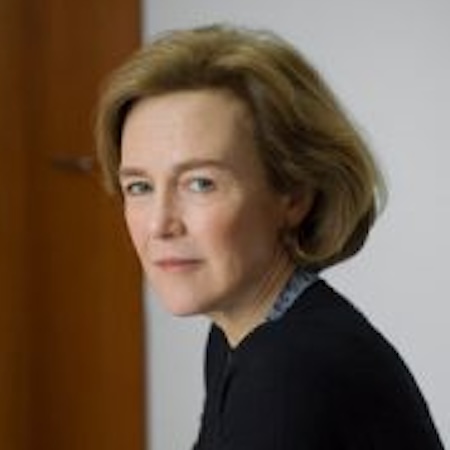
Author
Janny Scott is a journalist and the author of two books, The Beneficiary: Fortune, Misfortune, and the Story of My Father and A Singular Woman: The Untold Story of Barack Obama’s Mother. She was a reporter for The New York Times for fourteen years, writing about race, class, demographic change, and ideas. She was a member of the Times reporting team that won the 2000 Pulitzer Prize for national reporting for the series “How Race Is Lived in America.” In the immediate aftermath of the 9/11 terror attacks, she and Christine Kay, a Times editor, conceived Portraits of Grief, a series of thumbnail profiles of several thousand victims, which appeared in the Times every day for months. She was previously a reporter for the Los Angeles Times and The Record of Bergen County, New Jersey. Her first book, a New York Times bestseller, was the runner up for the PEN/Jacqueline Bograd Weld Award for Biography and one of Time magazine’s top ten nonfiction books of 2011. Her second book was one of The New York Times 100 Notable Books of 2019 and one of NPR’s Favorite Books of 2019. She has appeared on The Colbert Report, Today, MSNBC, C-Span, Fresh Air with Terry Gross, the Leonard Lopate Show and other television and radio programs. She is a graduate of Harvard College and lives in New York City.