Mother's Day Ritual: Share what she gave you
Have you saved treasures from your mom? Find and share them for a revealing -- and emotional -- tribute
Here's a special Mother's Day ritual: Dig out the letters and other items that your mom gave you over the years, show them to someone, and tell the stories about her that relate to what you saved.
That's what I did two years ago. It was the most meaningful Mother's Day since my mom died.
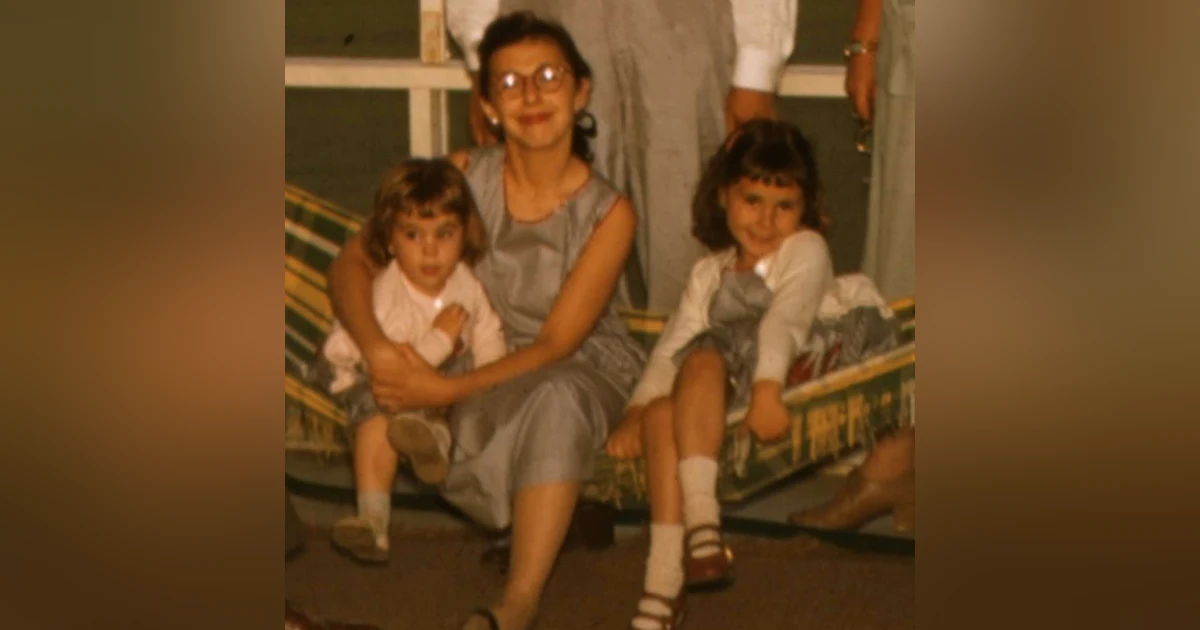
Of course, I went a little overboard when it came to saving things. Doris Small (above, with my sisters before I was born) sent me 104 cards and letters since I was in high school in the early 1970s. Reading through them was like going back in history, discovering how the world, our lives and our attitudes, have changed over the decades.
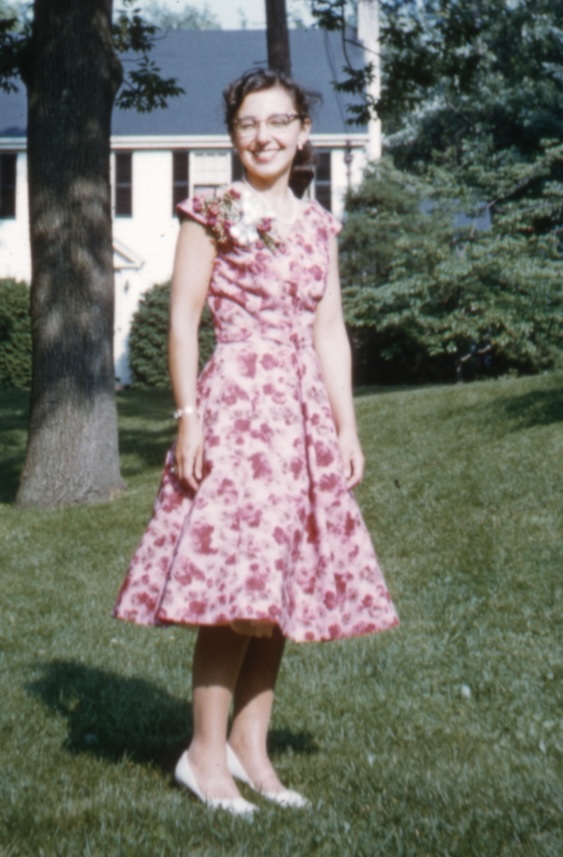
Doris in the late 1940s.
And here's what made the big difference: Asking my friends and a few family members to read short excerpts out loud with me and discuss them. It gave me new perspective about my mother, and all of our mothers.
But it didn't solve one problem. For those of us who save treasures from our mom, what should we do with them now?
For this, I needed an expert. So I interviewed my friend Susan, a psychoanalyst who has been helping parents and children for many decades. She didn't tell me to practice Swedish Death Cleaning. Instead, she shared insights about my mom that will apply to everyone who has or had a mother. Spoiler alert: It gets emotional.
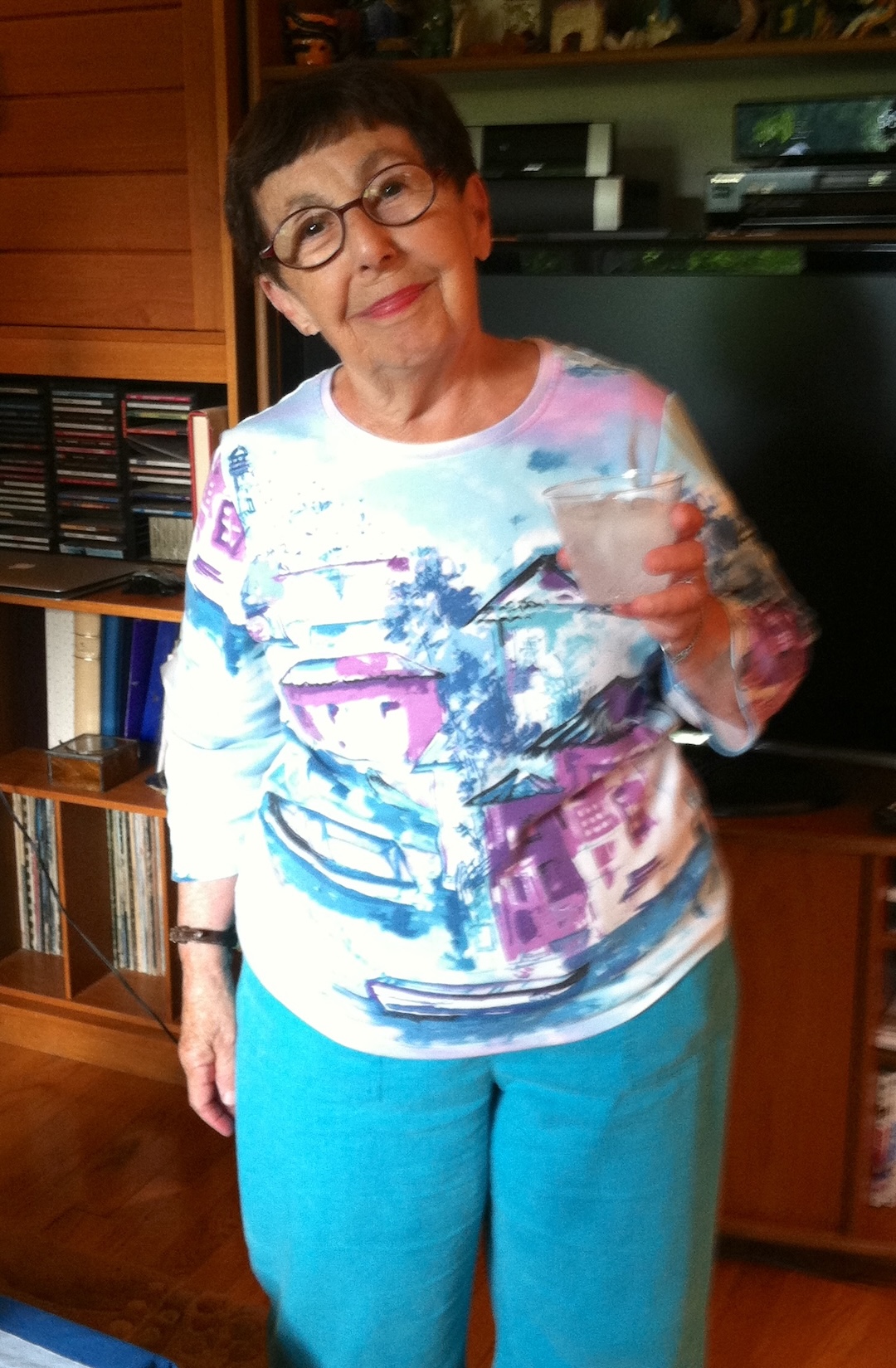
Doris in her mid-80s.
I hope – after listening to the episode – you'll be inspired to share with family and friends what you've saved from your mom. And here's more to inspire you...
- Got a letter or card from mom that you'd like me to consider for sharing on my blog? Send me the text
- Need more evidence that Doris is a performer? Watch her sing and recite poems in these videos
- Missing your mom on Mother's Day? 30 years ago my mom wrote a beautiful tribute to her mother-in-law. Read in on my blog
- And then, of course, there's Doris's satirical version of "The Midnight Ride of Paul Revere." Read it here
- My co-host Sally Libby's mom passed away after recording our 2025 Mother's Day episode at age 98. But you can still hear her wise thoughts
Happy Mother's Day!
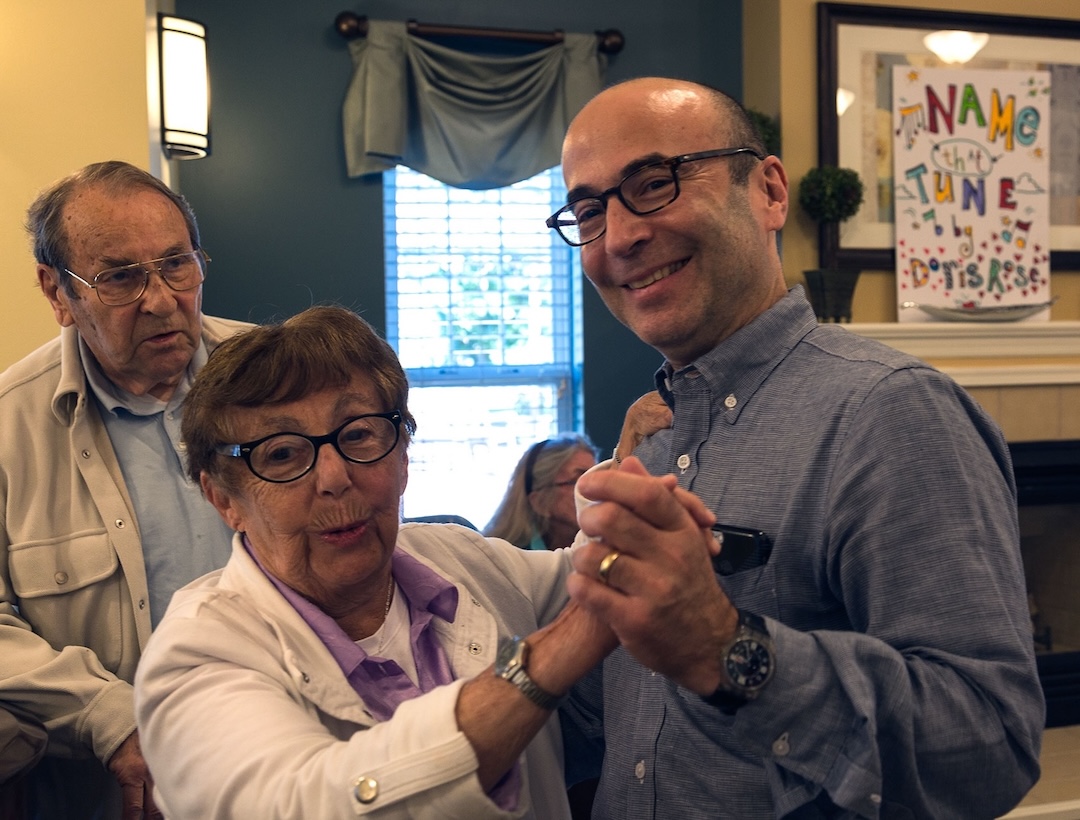
Dad, Doris, and me, swingin' at her 90th birthday party.
Have thoughts about this episode? Send us a text
More info, photos, and transcript: throwitoutpodcast.com
Don't miss a thing: Join our mailing list
Do you save stuff you can't throw out? Tell us about it
Want to show support? Please rate/follow us wherever you get your podcasts.
I Couldn't Throw It Out, Season 3, Episode 41
Mother's Day Ritual: Share what she gave you
Michael Small:
On this episode of I Couldn't Throw It Out, we are celebrating Mother's Day with some very strong emotions and some intense thinking about motherhood.
[Interview excerpt begins]
Susan:
Mothers have such a powerful effect on who we are, probably more than any other relationship. They give us life. And what is more powerful than that? They're inside of us in so many ways. It's important to appreciate it's more of a gift than a curse.
[Interview excerpt ends]
Michael Small:
Find out what sparked these thoughts and to get ideas about what you might do with treasures you saved from your mom, keep listening.
[Song excerpt begins]
I couldn't throw it out
I had to scream and shout
Before I turn to dust I've got to throw it out
[Song excerpt ends]
Hello and welcome to the second annual Mother's Day episode of I Couldn't Throw It Out. I have to believe that many of you save treasures from your mom, and I don't think it'll shock you to hear that I do too. Of course, I went a little overboard. I've saved every card and letter my mother wrote to me during my entire lifetime. I have about 104 of them. Some were written more than 50 years ago.
Whenever I go through things like this, there's a part of me that wonders, maybe I should toss it in the trash and be done with it. But I cannot get rid of this nagging belief that there's value in the things we save. There's history. There's insight.
To try to prove this point, I gathered six people two years ago on Mother's Day 2024 around our picnic table with the birds chirping all around us. I turned on my recorder as we read short excerpts of my mom's letters and talked about them. The crowd included our excellent friends, Jamie and Alison Von Klemperer, and their two adult daughters, Elizabeth and Caroline. None of them knew my mother, but my wife Cindy and my sister Debbie, who happened to be in town that day, both knew my mother very well, so they give some insider perspective.
I saved that recording two years and then played it this year for a very insightful friend. She happens to be a psychoanalyst. So I recorded her reaction to our Mother's Day discussion and her thoughts about why we save things from our mothers and what we might do with them. I should warn you, it gets emotional, but come on, it's Mother's Day, the perfect holiday for getting emotional. So listen in as we hear the words of my mom who died eight years ago and as we celebrate all of the women who created all of us.
[Brief music plays]
Michael Small:
Today is Mother's Day and we are thinking about mothers today. And one of things we sometimes do when we're together is read some things with each other. And I'm asking the family here to help me look at the letters and cards that I received from my mother. Hopefully it'll bring back memories for them about their mothers, which maybe they'll share. And also for anybody listening, maybe memories of what you got from your mother.
The big surprise was I did not realize how incredibly loving and generous and kind the notes where my mother were. When we got them, we took them for granted. We kind of read them and threw them aside. But as a whole, when you look at it, it is such a collection of amazing love. And I felt so privileged to see that. I mean, there people who might say it was a little too much love. But I've selected a few excerpts for people here to read. These are all different ages, but one, I was in high school. Most of these I just happened to pull out. They were from college. And I think since the person who shares the same mother with me is my sister Debbie, we might start with her. She has a selection here where my mother was writing about her mother, who we called Grammy. Can you explain why she's writing to you and me together? That's why I picked this letter for you.
Debbie Baylin:
Well, I had no idea. You seem to think that we were at camp together and I have no memory of that whatsoever.
Michael Small:
I was a dishwasher while you were a counselor. Okay. Would you like to read us this letter?
Debbie Baylin:
Okay, Thursday. That was very typical of mom. Never a date, just Thursday. Dear Deb and Mike, poor Gram is so deaf. I've been screaming for two days. She really can't hear at all, but she's actually been pretty good for her. Unfortunately, we couldn't go outdoors yesterday. We had a brief outing. I drove her over to the music theater to get a ticket. She couldn't find her panties. I found them when we got home in her suitcase. So she purchased two pairs of drawers in Marshall's. Just her speed. Two for one dollar. Gram is sitting here chewing a cinnamon bun, which is downright disgusting. So I think I'll end it all and lock myself in the bathroom. Write, eat, sleep, and be grateful for some small favors. I love you both madly. For.
Michael Small:
That was letter number one. We're going to move on to Jamie. There was a class, Symbolist Poetry. It's the only time in my entire college career where I actually had the best exam in the class. I wrote to my mom to tell her that I did well on this, and this is what she wrote back.
Jamie Von Klemperer:
So this is written to Michael. Monday, Dear symbolism in poetry champ, Boy, am I proud of you. To do the best on an exam is indeed an accomplishment. But what about the hair symbolism in Madame Bovary? Leon curls and uncurls his hair. Emma's first glance is at hair. The stable boy almost swoons when he sees Emma loosen her hair. I was going to have a haircut this week, but now I'm afraid if I do, I'll lose my sex appeal. Now that the pressure's off, how about a letter? Love you much-ly. Miss you madly. Dor.
Debbie Baylin:
Could a therapist have fun with that?
Michael Small:
Okay, we've got to Elizabeth and Elizabeth is a writer. I chose this because it was the closest I could find for a writer of what she wrote when she went to see a play and this is her little review.
Elizabeth Von Klemperer:
Okay. Monday. Dear Michael, Saturday we saw California Suite and I had the same reaction I have from all Neil Simon shows. I think Simon considers himself a modern day Shakespeare, thinks he can successfully combine comedy and tragedy. Well, in my book, he can't. I have great difficulty laughing at people in trouble. I did howl a few times, but my overall reaction was, feh.
Michael Small:
Feh.
Elizabeth Von Klemperer:
Feh. Daddy smiled twice. I counted.
Michael Small:
So there's her literary criticism.
Caroline Von Klemperer:
What a sense of person that comes through these letters. I didn't know anything about your mom, but I feel like I know things about her character.
Michael Small:
Yeah, that's for sure. She was a character. Let me come around to your reading, Caroline. Yes. Here, it's this card that I received on my 21st birthday. And I selected this one for you because there's references to ethics.
Caroline Von Klemperer: (07:40.008)
Aw. Michael dear, I usually send you a funny card, but on your 21st I felt I was entitled to a little sentiment. However, I don't have to go into the run of the mill "when I was one and 20" because in your span of years, you've managed to find all the answers and leave me with all the questions. I don't have to utter pearls of wisdom if I had any or offer gems of advice, which you probably wouldn't follow anyway. With both feet on the ground and head in the academic clouds, you've managed to follow a path of dignity, understanding, and humanity, which has compelled those around you to follow with love. (This is so beautiful.) So have a happy, happy birthday. Have a drink for me -- one half of the reason for the whole celebration. I love you.
Michael Small:
Thank you for reading that.
Caroline Von Klemperer:
So beautiful.
Michael Small:
And when you were 21 then you could you could drink. So that was a reference to being 21. Now Alison, I brought one for you that is about being a mom. Thank you. This one didn't have any greeting on it. No hello, no goodbye, but this is what it said.
Alison Von Klemperer:
Your call left me teary-eyed and breathless. Not many parents hear such things said about them. If we have succeeded with you, it was only because the raw material was there. We did our best, made many mistakes, but at least were true to our ideals and moral standards. Thank you for loving us and knowing that we love you.
Michael Small:
So Cindy, I'm coming around for you. Here is a letter to Cindy and me. So that's why I gave it to Cindy to read.
Cindy Ruskin:
Dear Cindy and Michael, Just to say thank you for your extraordinary gift would be completely inadequate. So after long thought, I realize that I want to say thank you for sharing your lives with us. Everything you have done for us has been a type of sharing that parents can only dream about. All that you have given us has been part of you. Now I can assure you that your most recent contribution will be spent in ways you would want it to be. You will be with us all the way. Cindy, I shall treasure your note forever. I love you both with all my heart. Dor.
Michael Small:
And then I got two small ones to read and I saved for myself. There's one. I don't know why she called me Truff. Dear Truff, I have no idea. It says Sunday. And so the days go by, the leaves fall and fall and fall. I've decided there's only one thing less inspiring than doing housework, raking leaves. If only I could discover some use for the end product. But you can't sow leaves, you can't weave leaves. Perhaps I could brew leaves, leaf tea. The whole property is one big mulch. And the most discouraging part about it is to look up and see leaves. So that was sharing our yard work interests.
But then there's one last one. This one I know for sure is from 1975 because it's from the fall I went to college. And it's written sort of like in a poetic kind of format. It says, Dor wishes to announce that all plants are indoors, all dead leaves are removed, all dead plants are buried, all exposed roots are potted, and after all this, so shall Dor be. You and your big fat green thumb. So she was a character and you certainly get the loving feeling from these, but we're going to say to Debbie, what's your take?
Debbie Baylin: (11:22.542)
I'm speechless. These are words that I never heard. I don't want to say it's a mother I didn't know because I knew of her tremendous love. I knew of her tremendous love. But the expression is so fascinating to me, to the different facets of who you are and were then that she's addressing and relating to. I'm intrigued by that and how she positioned each of her children into very different roles. Always so evident was her phenomenal love for you. It was just all-encompassing. And she lived through you, I think, a little bit. And there were responsibilities that were attached to it, but it was so pervasive and so genuine. I always admired that. So I feel blessed to hear her expression of how she felt about you as your mother.
Michael Small:
Well, thank you. Now, Jamie, one of things I did not know that we had in common was that both of our mothers were rather fond of us and did not see our flaws quite as much as perhaps other people did. Did you receive correspondence from your mother?
Jamie Von Klemperer:
Yeah, not every day, but pretty regularly because she was an English professor, a college professor. She took great care and pride in her writing. So a lot of her writing was about writing or it was carefully crafted. It was pretty balanced prose. There weren't too many flights of emotion in my mom's writing. They were kind of analytical letters. But they're always meaty, full of visual and other observations of things that most people wouldn't notice. She was pretty astute.
Michael Small:
Did you feel the love?
Jamie Von Klemperer:
Yeah, unconditional and always kind of a reliable love, you know, backstop always there. The writing didn't get operatic or didn't get, you know, wasn't highly demonstrative. It's a little bit more rational.
Michael Small:
Elizabeth, as a writer, my mother clearly wanted to be a writer. And she clearly tried to let that out in her letters. When you write letters, do you keep in mind that you're a writer or what you're leaving behind?
Elizabeth Von Klemperer:
When I write letters, I try to be the least literary as possible. I try to just speak colloquially like I would normally talk to someone because I don't want it to feel like affected with my preoccupation with language. So sometimes I intentionally don't capitalize things because I feel like when it just comes out without being edited, it feels more natural and it feels like that's an expression of love for someone is to just be really authentic and not overwork writing in the way that I usually do when I'm writing. So that's kind how I think about correspondence with people.
Michael Small:
Wonderful. I mean, I love that. The expression of love is to not try to perform. Wow, thank you. That's wonderful. Doris was a performer. Now, Caroline, I don't know if you noticed, but in your letter and one of the others, she mentioned morals and standards and ethics. I'm just curious if you have any thoughts about a parent bringing that up with the child.
Caroline Von Klemperer:
One thing that struck me was that when you asked me what memories I had of my mom that struck me as meaningful, the first two things that came to mind were you wrote me these letters, one has a lion on it, and one was some mother daughter thing, and I was much younger. And they were really meaningful to me. So I always keep them in a folder with me. They're just very meaningful. The other thing was that your mom seemed to find meaning in a lot of things. What she thinks is worth mentioning or what she's interested in. She seems to communicate that she sees the world in a way such that she finds interest in meaning in a lot of things.
Michael Small:
Alison, as a mom, did you have any reaction to anything you've heard?
Alison Von Klemperer:
What I was struck by in listening to the letters that were read here was how much your mother communicated two things at the same time, both a love and respect for you, but also that she was sharing intimate details about herself and that she managed to tell you who she was and what interested her and that she was passionate about literature, for example, or your interest in scholarship and academia, or when you were younger, what you might've been doing in summer camp, that she was really interested in you, but at the same time managed to tell you something about her and her interests. I really enjoyed the balance in those letters.
Michael Small:
That's amazing because I have later letters where her life was not so happy and where she confided in me and told me how unhappy she was.
Jamie Von Klemperer:
That's very unusual, because parents try to present this bullwark of confidence and not to worry their kids.
Michael Small:
Yeah.
Caroline Von Klemperer:
I don't think it will happen or it happens rarely, but I would want my parents to confide in us the things that are hard. I mean, I guess it's a thing I think about as we get older is just that our relationships with our parents shift. I would hope to be able to have reciprocal relationships where and where if someone is experiencing difficulty or like emotional difficulty, especially maybe in some way that I could be of help as a friend.
Debbie Baylin:
For our parents' generation, there was no revealing. I don't think it was a conscious choice to withhold from the children. It just wasn't what was modeled. You kept that behind closed doors. Whereas this next generation is much more open to the sharing and the transparency of the family dynamic.
Cindy Ruskin:
I actually want to respond to what Caroline said because it just made me very sad. My mom wanted me to talk to her and I refused. She wanted to those intellectual conversations and I could just see her because she was such an actress. I'm having a fancy conversation with my daughter. And so I would just walk out when she tried to do that. And when she was dying, she said, you're the one person who would understand. And I didn't stay. I just couldn't have those conversations with her. And now that you're saying this, it's too late. I really regret it. But I'm glad you feel that way about your parents because you will be able to have those conversations.
And so the opposite of what Debbie's saying, my mom actually did. I walked away. It was too exciting for her. She was too excited about this moment. I didn't want to give it to her. And now feel like, why did I not want to do that? Anyway, sorry, I didn't mean to get that emotional. It never crossed my mind until you brought it up. It's, I mean, I do know both those incidents, but I just never saw it as something that was upsetting to me.
My mom couldn't be more different than Michael's mom. My mom was extremely sophisticated and cared about that and was very aware of her self-presentation as an adult. And I didn't think of her as funny, but she actually did very funny things and wrote some funny letters. But Michael's mother, the first time I met her, she was, first of all, she was watching some kind of game show on TV. Name That Tune.
My parents would never watch a game show on TV. They just, we only watched the news, 60 minutes and Monty Python. And so the idea that a mother was watching a game show was so bizarre then she was jumping up and down on the couch which my mother would never do because she was so excited because she could name the tune and she was screaming "Turra Lurra Lurra."
Debbie Baylin:
We did leave out one small detail there. It was the 10 million dollar answer that she had just won.
Michael Small:
Yes. Exactly. Exactly.
Debbie Baylin:
She carried that with her for many, years. That was really why she was jumping. Watching the game shows was not normative at all. It was that it happened to be on at dinnertime when she was prepping. And so it became a fun thing. But she was not a game show person.
Michael Small:
Was there anything anybody else had on their minds? Anything you're thinking, Alison, about your mother?
Alison Von Klemperer:
What was interesting, I mean, all of our mothers, we have to be clear when they were born. So my mother was born in 1922, lived through the Depression and the Second World War. She very much lived in her head insofar as she was great at math and engineering. When the men went to war, she could go into a graduate program in math. So she was given that opportunity. And she was very good at what she did. She read everything she could get her hands on. She led an interesting intellectual life. But the center of her being was being maternal. She was just a deeply maternal and deeply nurturing person who just happened to love to read a lot. But it didn't seem to be in opposition or in conflict. Both of those things lived together happily for her. It wasn't either or. There was no binary for her. It was both.
Michael Small:
Well, I want to say thank you so much to all of you for participating in this. Debbie, do you think Doris would be upset that we spent a little while just talking about her?
Debbie Baylin:
I pledge the Fifth.
Cindy Ruskin:
She's in heaven, jumping on the clouds.
[Brief music plays]
Michael Small:
That is where our recording ends, but there is some major unfinished business. Because of what I see in front of me right now, it's two large folders. Each one is labeled with the name Doris, and they are stuffed with the cards and letters I saved for my mom. Even though we did share a few excerpts from some of letters, I still don't have a clue what to do with them.
So I'm taking the only next step that makes sense to me. I'm bringing in an expert. My friend, Susan, has been a psychoanalyst with adults, children, and families for several decades. She's also been a daughter and a mother. And I've had the same experience with her again and again. She says something in a sort of matter of fact way. And it's an insight that resonates with me for months. I convinced her to help me think about my mother and her letters, and she's with us now. Hello, Susan.
Susan:
Hello Michael.
Michael Small:
I'm so glad that you took time for this, and I'm also really glad that I saved my mother's letters. It didn't just remind me about my mother. It kind of made me step back and think in general about mothers and motherhood. It raised many questions. So I'm really eager to hear your thoughts. Are you ready?
Susan:
Absolutely. Let's hear what you have to say.
Michael Small:
First of all, I know you listened to the tape of us reading my mom's letters. Do you have a reaction to anything you heard?
Susan:
Yeah, I was very moved by them. I was impressed with the eloquence and the depth of feeling and the desire to share and connect. To me, they seem like treasures.
What came across to me was your mother, I think she felt thwarted in many ways in terms of her ability to be out in the world, demonstrate who she was, share her talents, and become fully who she wanted to be. You being a male child, I think she assumed you would have more opportunity to do that.
I think it was your sister said she always kind of admired and I'm sure more than admired in some ways, your mother's affection and attention to you and that your mother lived through you in a certain way. Also how that would put a burden on you in a particular way that you couldn't just experience the talents that you did inherit from her and the interest and motivations to use those talents. You were doing it in part for her as well, how could you not? We all carry some of that, some of us more than others, but it's a mixed bag.
Michael Small:
Wow, I'm blown away. I can't believe how you got to the heart of things so easily.
Susan:
Mothers have such a powerful effect on who we are, probably more than any other relationship in a way. They give us life. And what is more powerful than that? They don't do it alone. And sometimes that's forgotten. And it's important not to forget that. They're inside of us in so many ways. It's important to appreciate it's more of a gift than a curse.
Michael Small:
I love that approach because some people see it the other way and I don't like seeing it as a curse. I like seeing it as a gift.
Susan:
Parents, elders, let's say, give their children what they would have wanted very often. They can't help it. It's just part of the thing from generation to generation. They also envy their children for what they give them. Both are there. There's always that tension and tendency to overdo, perhaps, sometimes.
Michael Small:
My mother's father was hit by a car and killed in front of her house while she was home when she was 10 years old.
Susan:(25:26.217)
Oh my gosh.
Michael Small:
We did not discuss that very often, but I feel, especially looking back, that it affected everything in her life.
Susan:
My gosh, that is like a hydrogen bomb in terms of the impact of that kind of experience on her own development.
Michael Small:
She was left alone with her mother who was an immigrant who had been through very hard times as a child herself and her mother tried to spoil her and then she went off to college at age 16 and then the war happened. Her life was disrupted in many ways and she was very good academically and was fluent in Spanish and Portuguese and then became a mother.
This could be a stretch, but I was going to ask you if in some ways I wonder if she was writing to her father, not just to me. She saw her father as a great intellectual. The only thing she said about him to me was that she remembered hearing him downstairs talking about big issues with his friends.
Susan:
Yeah. Her motivation, her wish, the love, the admiration, that sense of connection to him through language, through intellect. That was clearly a huge chunk of what she wanted to give you and who you represented.
Michael Small:
I want to just ask one more question about my mother's relationship with me through the letters. I was a little worried it could be seen that it was a little too much. It was problematic.
Susan:
How can there ever be too much love, too much feeling? The world doesn't have enough.
Michael Small:
Such a nice thing for you to say. Thank you. I also want to talk about another aspect of this. For anyone who saves letters, I think there are a lot of questions about sharing. Like, should this have remained personal? Is it disrespectful to make them public the way I did? Is there any good motive for sharing them?
Susan:
Of course, you're sharing something that's meaningful to you. You're not disclosing something that's going to hurt someone else. And your mother, clearly from those letters, was a performer. She liked to be looked at and view and acknowledged and seen. And I think you knew that. If she's looking down on us in some way, she'd be having a great time hearing her letters being read and having others hear it and know how she felt about you. She didn't want to keep that a secret.
Michael Small:
I worry a little that sharing these letters is like saying, see how special I was to my mother, et cetera, et cetera. And I don't want that to be the case.
Susan:
Well, who would be the people who would kind of turn their nose up at something like that? How much do you really care what they think?
Michael Small:
I asked the question because I would like this podcast to encourage other people to get out their letters and share them. So I'm asking in case anybody else would feel the same way. And I think your answers will be helpful to anyone who for this Mother's Day might consider getting out the letters, reading them to other family members or sharing them in some other way.
Susan:
As you said, you know, it's about sharing the love and the connection, that sense of connection. As far as I'm concerned, there's just not enough of that going on in the world right now. And the antidote to all the disconnect, cruelty, dehumanization that's taken over our lives, this is exactly how to fight back.
Michael Small:
That's also extremely generous and I really appreciate it. Thank you for that. I want to talk about when we study history, letters often give us tons of insight into a time period, the way humans were for the 250th anniversary of the Declaration of Independence. I think the letters between the Adams, John and Abigail Adams are resurfacing and what they thought about what was going on. But it seems really difficult to decide which letters are worth saving. I feel this historical value, but I don't know what to do about that.
Susan:
It's people expressing what they want others to know about them, which is what your mother did.
Michael Small:
Yes. I just wish there was a place where everybody could send their letters to have them saved or someone to edit them and decide which ones are saved.
Susan:
I actually know of a German historian who one of her doctoral theses is on how our current technology changes the recording of history because we have so much potential for eyewitness descriptions.
Michael Small:
I was thinking from the negative approach, which is now that there's email, somebody who is 20 years old now will not have so many letters from their mom when they are my age later on. They'll have emails. I think though you hit on the thing that people may save the videos and people take a lot of videos. So video may be where it's going and people will save videos and share videos.
Susan:
The to be known, the wish to be known is so powerful.
Michael Small:
Along those lines, what really unsettles and upsets me is the fact that my mother will disappear when her four kids are gone. She felt like an important character to me, and I feel like she deserves more than that. I don't want her to disappear, and I do think there may be some projection here because I'm getting older and who knows what my future holds. Maybe I'm concerned that I will disappear.
Susan:
That's why I think our spiritual lives are important too, because there's a contribution to the karma. It's there and we don't have control over it, but we give ourselves to it to some extent. I just was talking to somebody and her experience, she described it as like the Seurat pointillist painting of Sunday in the Park and each dot, it makes a whole in this beautiful way. That dot was just in that moment was put on that and then it kind of gets lost among all the other dots.
Michael Small:
So one dot is my mother, one dot is my grandfather who got killed when she was 10. One dot is me, one dot is my wife Cindy, and one dot is you and all my siblings.
Susan:
Well, yeah, I think you just never know when what you put out there will resurface. It's just like, you know, the bottle in the ocean.
Michael Small:
So Doris's dot is still there and makes differences in ways that we won't really know, which is a cheerful way to think of our mothers, whether they're here or not here. They're all the dots and on Mother's Day to think of what they've all given is really a beautiful thing.
Susan:
Absolutely. The beat goes on.
Michael Small:
Well, earlier you alluded to something that made me super happy. Like you sort of alluded to the fact that, no, I don't have to throw out these letters.
Susan:
I could imagine reading them, each time you would get something else out of it. It's not like they take up so much space in your home that you would have to get a trailer next door. It seems like you can contain them. Your heart is big enough.
Michael Small:
I couldn't throw it out and I don't have to throw them out. I mean, they're right here. There's two envelopes.
Susan:
Not everybody has them. Most people wish they would have more of that to be able to connect with and treasure.
Michael Small:
If I don't have to throw them out, now I'm thinking long range. I don't have kids. Even if I had kids, I doubt they would want the letters from my mother to me. Possible, but unlikely. So I have a box where I put things that I call processed that I've dealt with them on the podcast and they go in that box. And I guess the feeling is that the letters will be thrown out when I'm gone. Somebody will throw them out.
Susan:
I gather you have nieces and nephews?
Michael Small:
I do, but I'm not convinced that any of them would want these letters, but it'll be their decision is basically it.
Susan:
Exactly. I mean, I think it's their ancestor too and has bearing on who they are.
Michael Small:
Part of what we want to avoid is a burden for people when we're gone. And despite the fact that I have these 26 boxes of things that I've saved in the attic, you could throw out those boxes in an hour if you wanted to. And it wouldn't be that much of a burden.
Susan:
You might be surprised of the value to others these things may have. You just never know. They're not 10-foot sculptures.
Michael Small:
And I think that I want everybody listening to hear that, that if you save letters, someone with great insight is saying to us, it's okay to save them. This is not necessarily a burden. I will say that at least four of my boxes upstairs are full of my parents' things. They did not throw out anything and we spent weeks and had a dumpster and it was a very difficult process that partly led to this podcast because I didn't want to do that to anybody else.
Susan:
That's the other extreme, not doing any of that selection process. And if someone did have a traumatic loss in their lives, it's not unusual for them to have more difficulty in letting go of things. It's part of that kind of reactive pendulum type of force in life in the world. So people have their reasons for holding on and sometimes there were unforeseen benefits.
Michael Small:
I just want to read one more letter from my mother. It's hard for me to read this, but I really want to make an effort because I really want to share this one. You know, when I did the readings with our friends at Von Klemperers, I was as usual in a rush and I missed one that was really meaningful. And I would like to read this sort of backing up what you're saying about why you save these things because they have value. I might have to pause a few times, but I'm going to get through this.
Susan:
Do what you gotta do.
Michael Small:
As always, she just put the day of the week, not the day of the year. So it says Thursday. Dear Michael, When you moved to San Francisco, daddy and I plan to send you a resettling gift.
However, our world suddenly turned topsy-turvy. Our income came to a screeching halt and then illness hit. Thank God we've weathered the storm. Your father's health is better than ever. (He had had a heart attack.) We received a good-sized check this week from Chris. I've been able to make extra money tutoring.And we even had a, in quotes, windfall from an insurance cancellation check that was two years overdue. So please don't, so please don't return or tear up this check as you'll....
You will break our hearts. If you do so. We have enough cash on hand to more than carry us through until next year. We love you and we want to share with you. Mother. ...And it was $100.
Susan:
It's so moving and shows how much love in the face of so much struggle and pain. It gave them strength that they could still give to you when things were so, so difficult and scary for them. People with so much more materially are so often so restricted emotionally and disengage from what's most important to them, which is their love for those they love.
Michael Small:
Thank you for that. Thank you for hearing it.
Susan:
What you just read, I just don't feel there are words that can adequately describe the feeling that went into it.
Michael Small:
Well, that's the way. I want to remember my mother.
Susan:
Yeah, big heart and wonderful mind and sense of priorities and values.
Michael Small:
Thank you for joining me, Susan, and for all your insights, which I so greatly appreciate always.
Susan:
Thank for inviting me, Michael. It's been a privilege.
Michael Small:
And thank you to everyone who listened. If you saved any letters from your mom, I hope you'll consider getting them out and rereading them. I hope that that was enough to inspire you. And if you decide that you'd like to share any of them, please go to our website, click the contact link and send it to me so I can compile what I receive. I can put it on the website and that is at throwitoutpodcast.com. Thank you to the Von Klemperers and my sister Debbie and my wife Cindy and thank you to all the moms who put us here on this planet to read their letters and think about their lives and to think about our lives. And happy Mother's Day.
Susan:
Happy Mother's Day to you too.
[Theme song begins]
I Couldn't Throw It Out theme song
Performed by Don Rauf, Boots Kamp and Jen AYehs
Written by Don Rauf and Michael Small
Produced and arranged by Boots Kamp
Look up that stairway
To my big attic
Am I a hoarder
Or am I a fanatic?
Decades of stories
Memories stacked
There is a redolence
Of some irrelevant facts
Well, I couldn't throw it out
I had to scream and shout
It all seems so unjust
But still I know I must
Before I turn to dust
I've got to throw it out
Before I turn to dust
I've got to throw it out
Well I couldn't throw it out
Oh, I couldn't throw it out
I'll sort through my possessions
In these painful sessions
I guess this is what it's about
The poems, cards and papers
The moldy musty vapors
I just gotta sort it out
Well I couldn't throw it out
Well I couldn't throw it out
Oh, I couldn't throw it out
I couldn't throw it out
[Theme song ends]
END TRANSCRIPT


